
Apartment and Multifamily Roofing in Davenport, IA
Low-slope and metal roof repair and replacement for apartment and multifamily buildings in Davenport, IA, with resident notice and unit-by-unit leak tracing.
The work order comes through the resident portal at ten at night: water coming through the bathroom light in 3C. By morning there are two more, 3D and 4C, and the property manager is trying to work out whether this is one roof leak or three.
Apartment roofing in Davenport, IA is a puzzle with floor numbers on it. Residents report the stain, not the source, and a flat roof moves water sideways before it drips. We begin with the work orders, plot them on the roof plan and walk the roof with the maintenance lead. When the pattern lines up with a drain, a wall or a unit curb, that is where we cut.
Work Orders That Point Up
A good property manager keeps a log, and a good log is the best survey tool we have. Dates, unit numbers and weather conditions tell us whether a leak happens with wind-driven rain, with a thaw or only after a long soak. A leak that appears with wind from one direction is a wall flashing or a parapet. A leak after a thaw is a drain. A leak during a long, steady rain is a field seam or a puncture.
We ask for a copy of the log before the first visit. Then we plot the units on the roof plan, mark the penetrations above them and walk the roof with the log in hand. If three units on the same stack leak, the cause is usually a vent, a drain or a curb directly over that stack. This way, a commercial roof leak repair hits the source once, and the work-order queue clears.
Resident Notice and Quiet Hours
Residents are home during the day, home at night and home on weekends. Some work second shift and sleep late. Some work from home. A tear-off over a top-floor unit is not welcome at nine in the morning, and a crew that starts at six will hear about it.
The notice we draft for the property manager goes out a week ahead. It has the dates, the hours, what to expect and a name to call. It tells residents to move vehicles from the staging area, bring in balcony items and cover light-weight furniture. It tells top-floor residents to expect noise overhead and, in some cases, a visit from us to check ceilings. We keep the work to the hours the lease and city ordinance allow, and we tell the manager where the loud steps fall.
Parking, trash pickup and mail delivery stay clear. We close off only the spaces needed for hoisting and put cones and a flagger where residents cross the staging area.
Balconies, Breezeways and Stair Towers
Apartment buildings carry more roof detail than their size suggests. A stair tower rises above the main roof with its own flashing. A breezeway roof ties into the building at an angle. A balcony slab sits on a wall that moves differently from the roof. Each junction is a point where two materials meet and the sealant between them decides whether it stays dry.
- Stair tower and lift bulkhead walls: base flashing, counterflashing and the small roof over them.
- Breezeways and walkway canopies: slope, drainage and sealed edges.
- Balcony and wall transitions: through-wall flashing, drip edges and sealant joints.
- Roof hatches and ladders: curb seal, hinge wear and the paint around the opening.
We photograph each junction, mark the ones that have failed and group the repairs, so a maintenance team can see the whole story at a glance.
Kimberly Road, Bettendorf and the Growing Edge
Kimberly Road (U.S. 6) is a heavily developed commercial arterial through central Davenport, lined with retail, apartments and offices. Apartment buildings there stand among the retail and offices, and they share the same weather. The July 11, 2025 EF-2 tornado traveled from southeast of Blue Grass through Emeis Park and stopped near the Kimberly Road and Fairmount Street intersection.
Bettendorf grew 17.7 percent from 2010 to 2020, reaching 39,102 residents, and Le Claire grew 65.4 percent from 2000 to 2020. Fast-growing towns add buildings quickly, and every new roof still has to face the same weather. The National Weather Service logged heavy roof damage in Davenport, Bettendorf and across Scott County after the August 2020 derecho, whose destructive winds blew for 30 to 60 minutes.
An owner in Bettendorf or along Kimberly Road can use the same approach: walk the roof after a storm, check the corners and edges, and photograph the results for the file.
Parapets, Drains and Ice on Flat Roofs
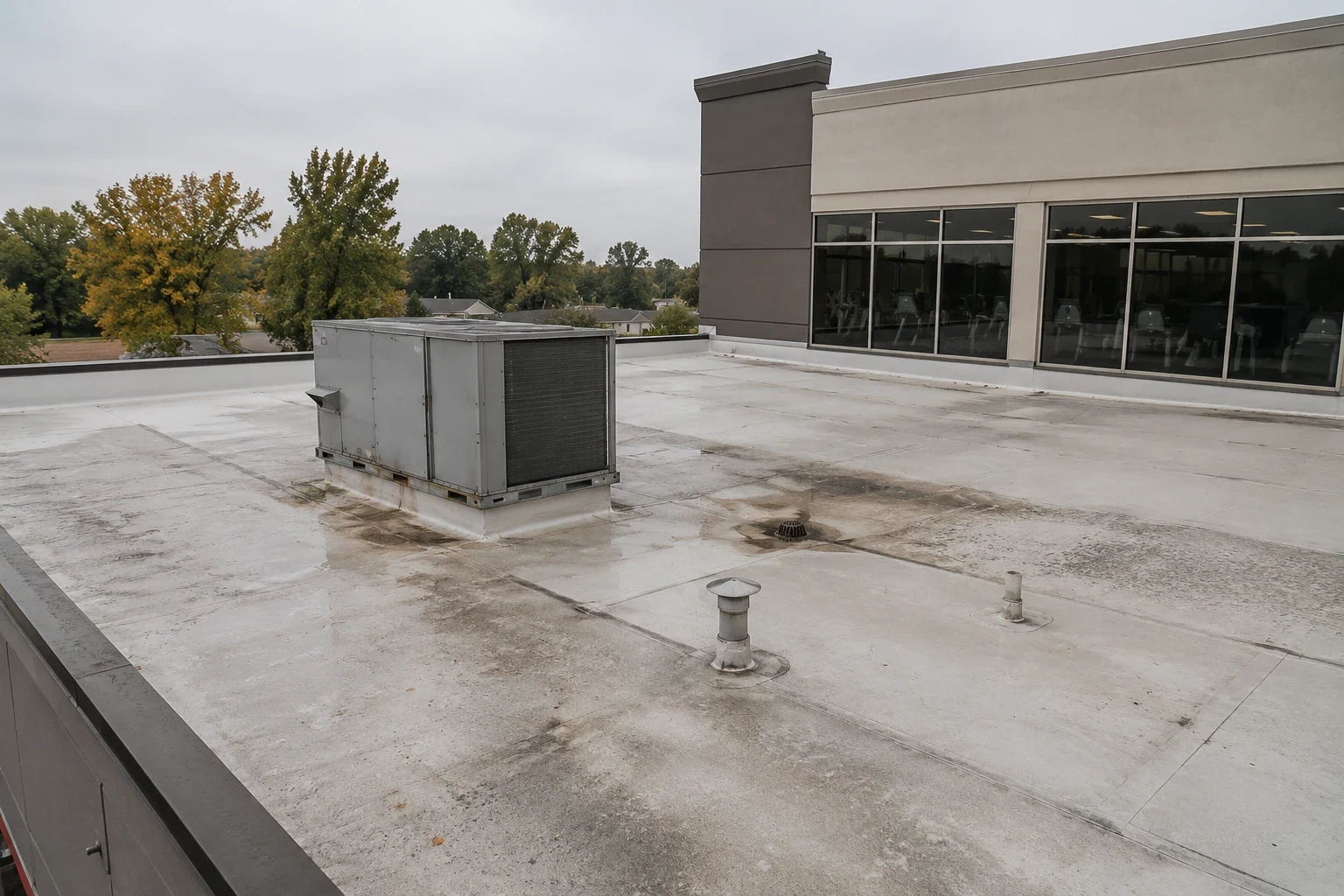
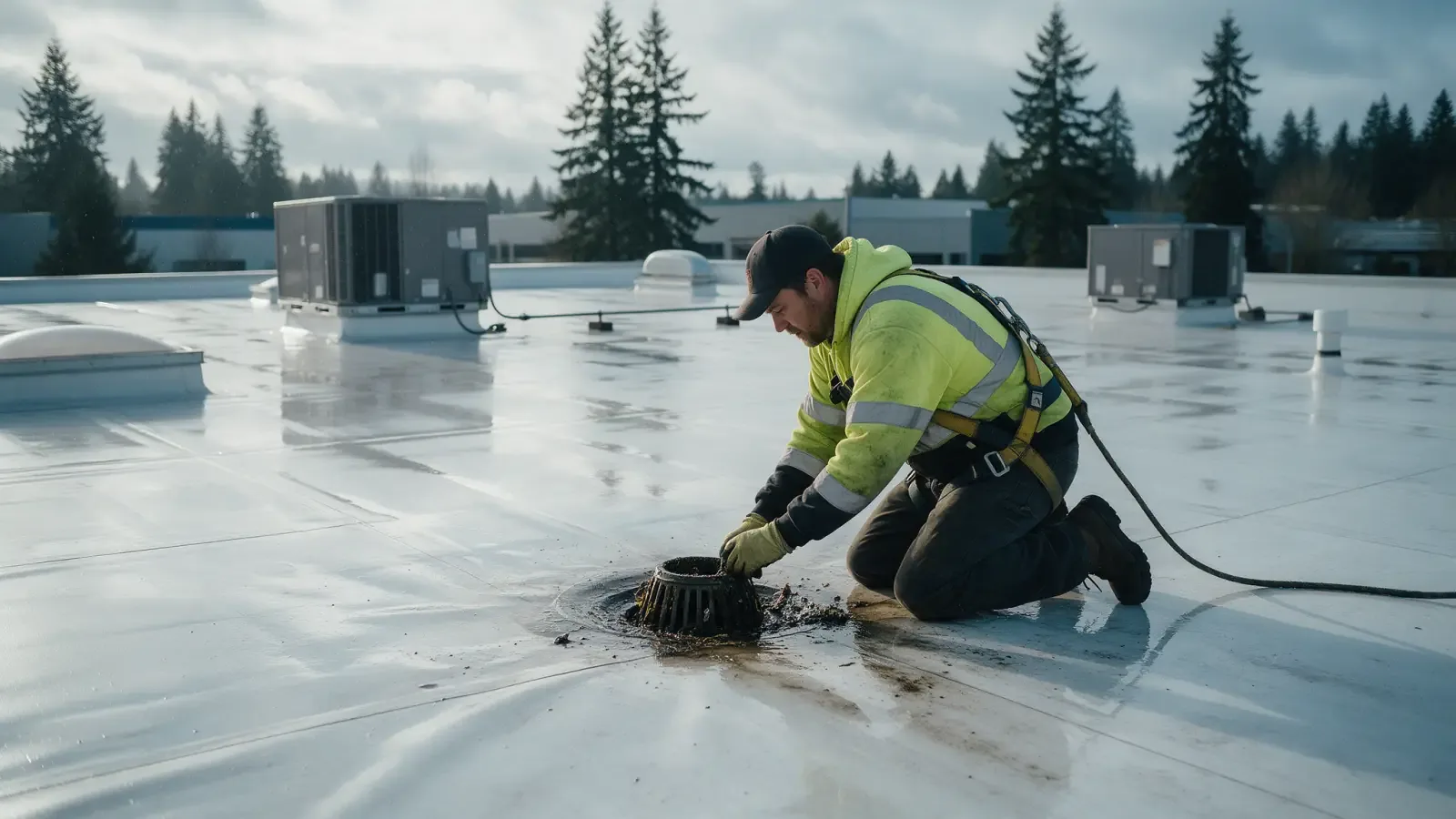
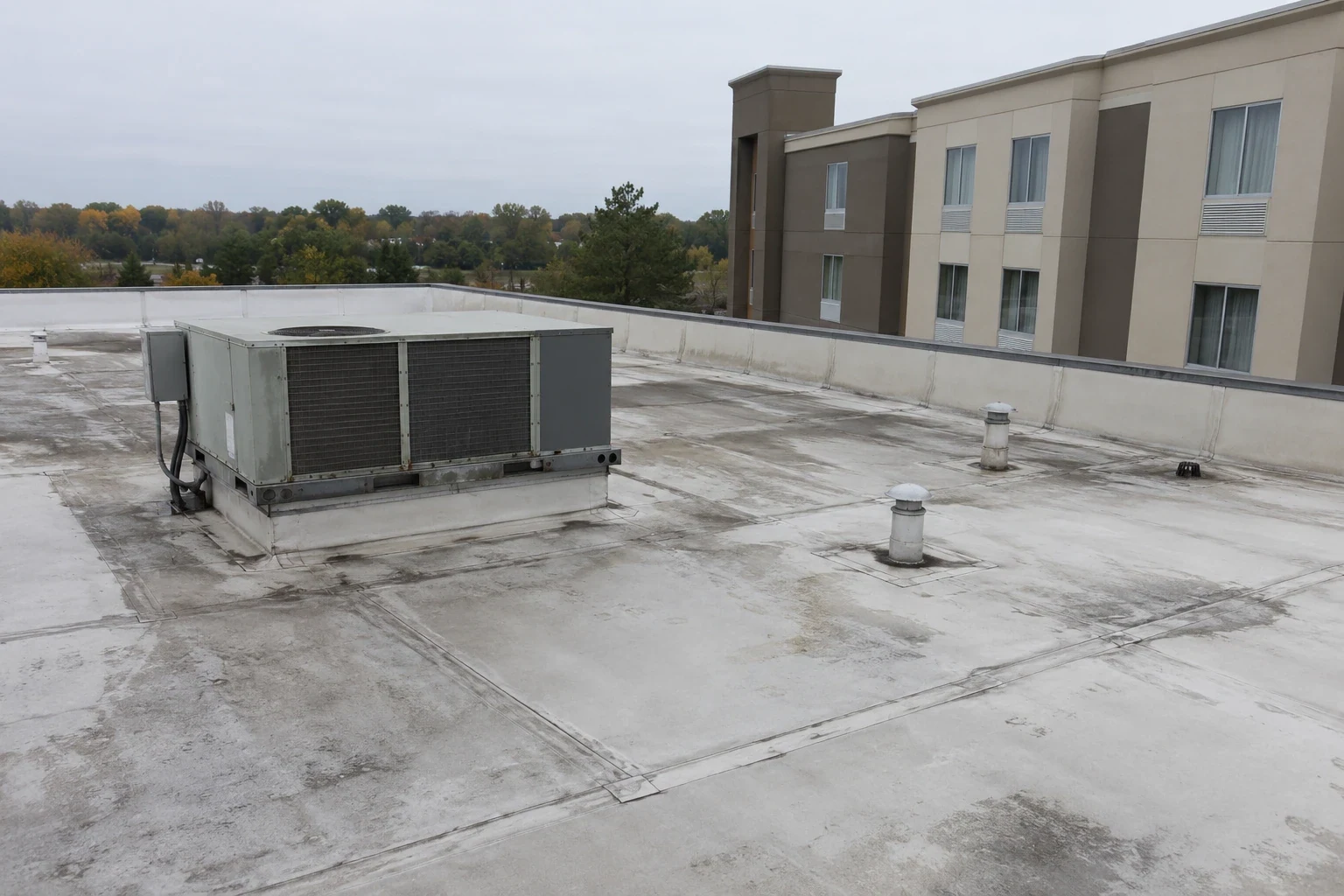
Flat apartment roofs depend on their drains. A drain that clogs with leaves in October backs up in December, freezes in January and sends water across the roof in a thaw. Snow in the metro runs past 36 inches in an average year, and the thermometer in Davenport has swung from 111 F to -29 F. That range works every seam on the roof twice a year.
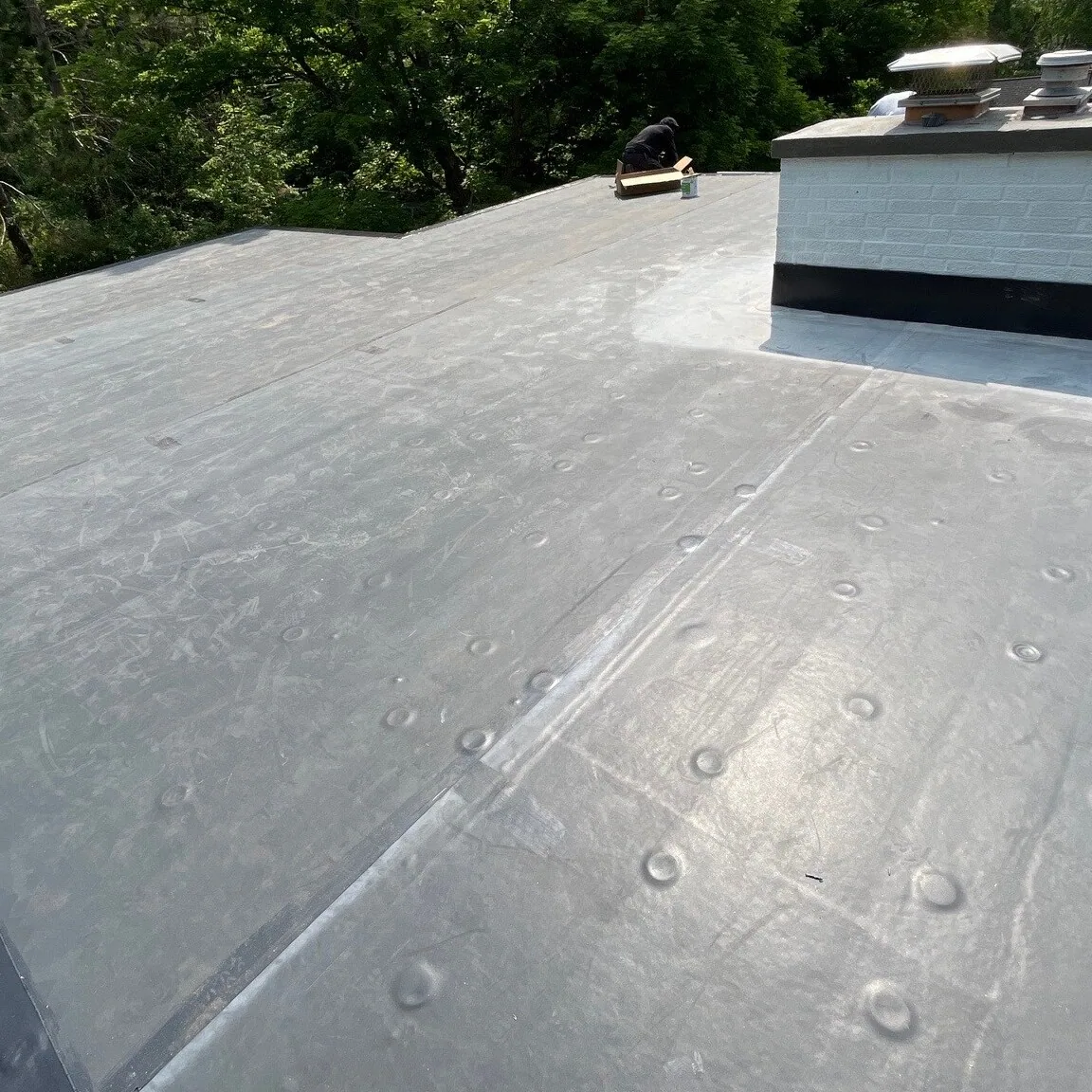
Low-slope roofs on apartments often use EPDM or a single-ply membrane, with parapet walls that hide the edge. Parapets need good coping, and coping needs tight joints. Drains need clean baskets, and the roof around them needs enough slope for water to leave. We check these two items first on every visit. They cost very little to maintain and a lot to ignore.
Budgeting Across a Portfolio
Owners and managers with several buildings need a plan, not a series of emergencies. We help property management companies sort roofs into repair, watch and replace, then spread the replacements across several budget years. A multi-site roof program puts the whole portfolio on one schedule.
Roof age is only part of the picture. Leak history, resident complaints and the cost of a unit out of service all weigh in. A building with three repeat leaks may go to the top of the list even if its roof is younger. The same logic of rooms out of service carries over to hotels, and a leak means something different in senior living, where residents cannot simply move out for a week.
Send the Work-Order Log or Set a Walkthrough
Send us the work-order log, the unit numbers that have had water and the roof plan if you have one. We will set a walkthrough with your maintenance lead, plot the leaks on the roof and come back with a plain recommendation.
Questions About Apartment and Multifamily Roofing
Three units on the same stack are leaking. Is that one problem or three?
Usually one. Water entering above the stack travels down through the same chase, so a vent, a drain or a wall flashing at the top is the likely cause. We plot the units on the roof plan, look at what sits directly above them and confirm with a moisture scan. One repair at the source stops all three.
How much notice do residents get before roof work starts?
A week is the working standard. The notice includes dates, hours, what to expect and a contact number. We draft it for the property manager and update it if the weather moves the schedule. Residents with balconies get a separate reminder to clear them, and top-floor residents are told to expect noise overhead.
Should we replace the whole roof or just the section over the leaking units?
Look at the roof as a whole. If the section is small and the rest is dry and sound, a targeted replacement is sensible. If the leaks are spread across the roof, or the insulation under the membrane is wet, patching one area leaves the rest to fail. A moisture scan makes that call clear before anyone commits money.
What can we do about leaks that appear only after the spring thaw?
Check the drains first. Ice or debris holds water on the roof, and when the snow melts it can back up against walls and curbs. Clear the drains, check the flashing at the parapet and look for lifted seams along the low side of the roof. If the leak comes back each spring, the drain or its slope probably needs work.
Can residents be home while the crew is on the roof?
They can. Top-floor units will hear the work, and the most disruptive steps are scheduled for hours when most residents are out. We cover walkways below the work, keep ladders and hoists out of the way and give the manager a single phone number for complaints so the crew never has to field them.

Talk to a Davenport Commercial Roofer
Send the work order, the building address or a few photos of what you are seeing. We will set a walkthrough, go up with whoever has the hatch key, and tell you plainly what the roof needs.