
Self-Storage Roofing in Davenport, IA
Metal and low-slope roof repair, recoating and replacement for self-storage facilities in Davenport, IA, scheduled building by building around open units.
A tenant stops at the office at closing time with a wet cardboard box in her arms. Unit 118, third from the end of the row, has a damp line down the back wall. The manager has the gate code, a ladder and no idea which panel let the water in.
Storage roofs are long, repetitive and easy to ignore until a customer finds a puddle. For a facility in Davenport, IA, we begin with a walkthrough: you send the unit number, we go up with whoever has the key to the roof hatch or the ladder, and the office has photos that evening and a straight answer on which fixes cannot wait.
Row Buildings, Repeating Panels
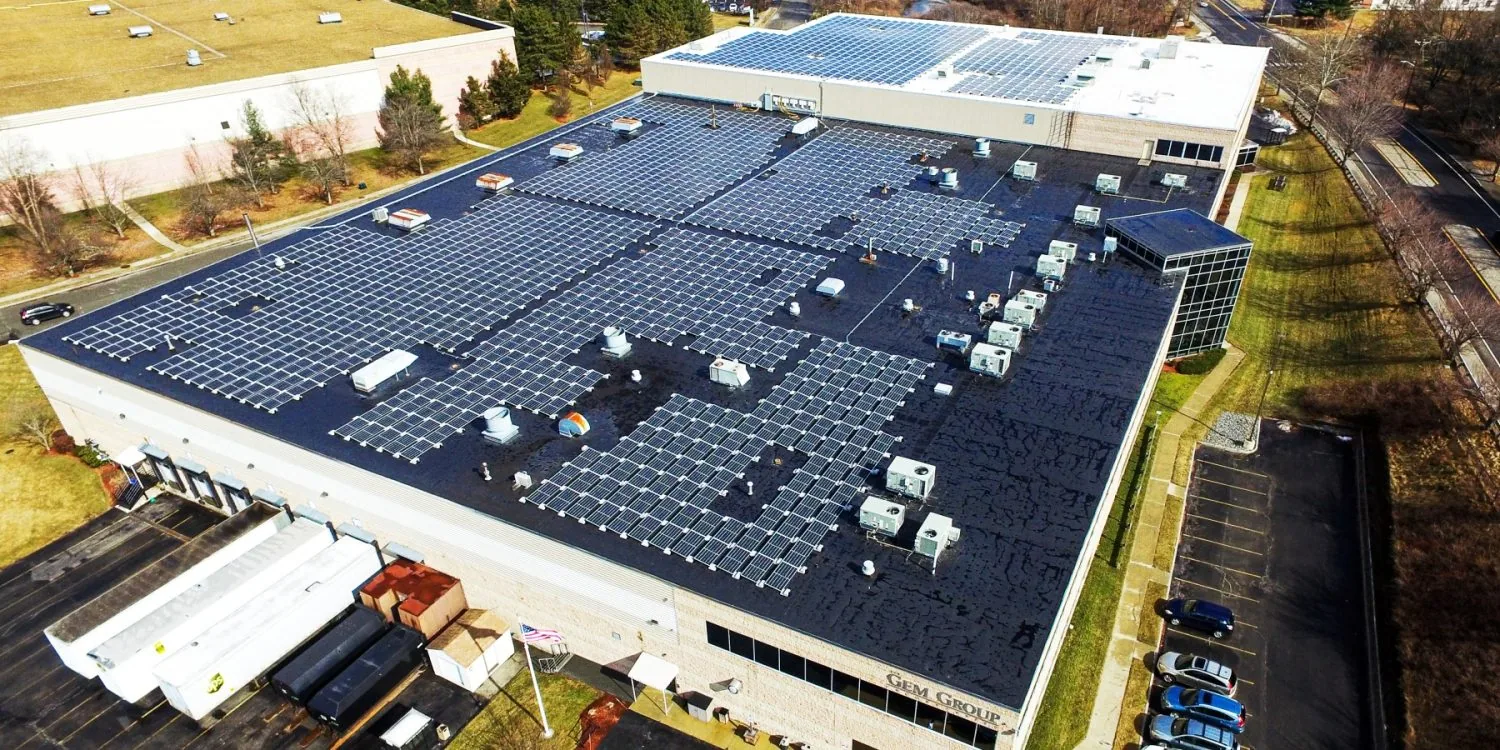
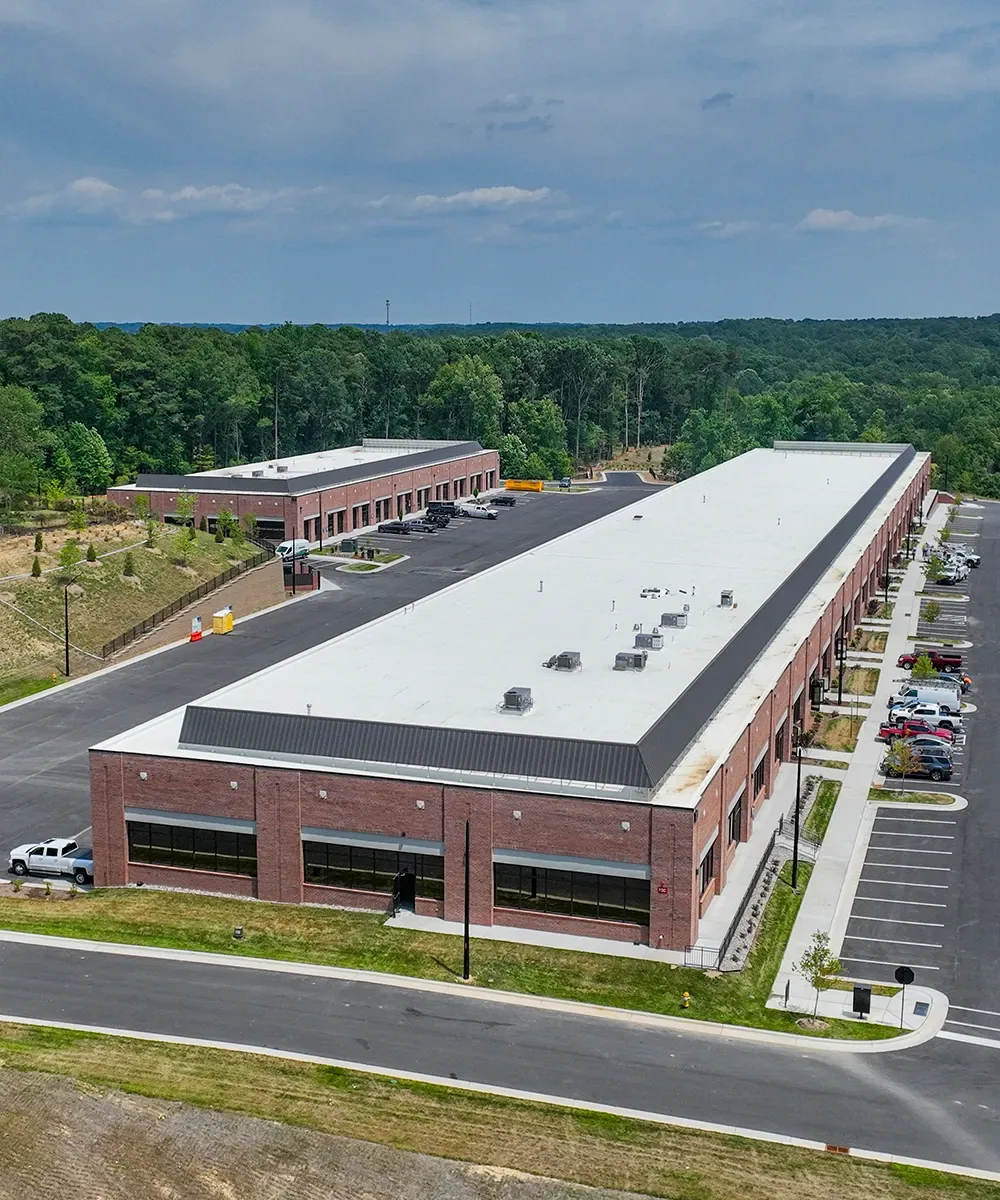
A storage property is usually a handful of long, narrow buildings, each with its own roof and drive aisle. The roofs are low-slope metal or a single-ply membrane over a flat deck. Every panel, every lap and every trim piece repeats down the length of the row, and a mistake in one place repeats too.
That makes the leak hard to place. Water enters at a lap near the ridge, runs along the underside of a panel and drips into a unit twenty feet away. So we walk the full row and read the pattern: stains in a line, rust streaks on a purlin, daylight at a closure. On a membrane roof we follow the seams to the drain. The point is to find the cause, not to chase each wet unit with its own patch.
Screws, Laps and the Temperature Swing
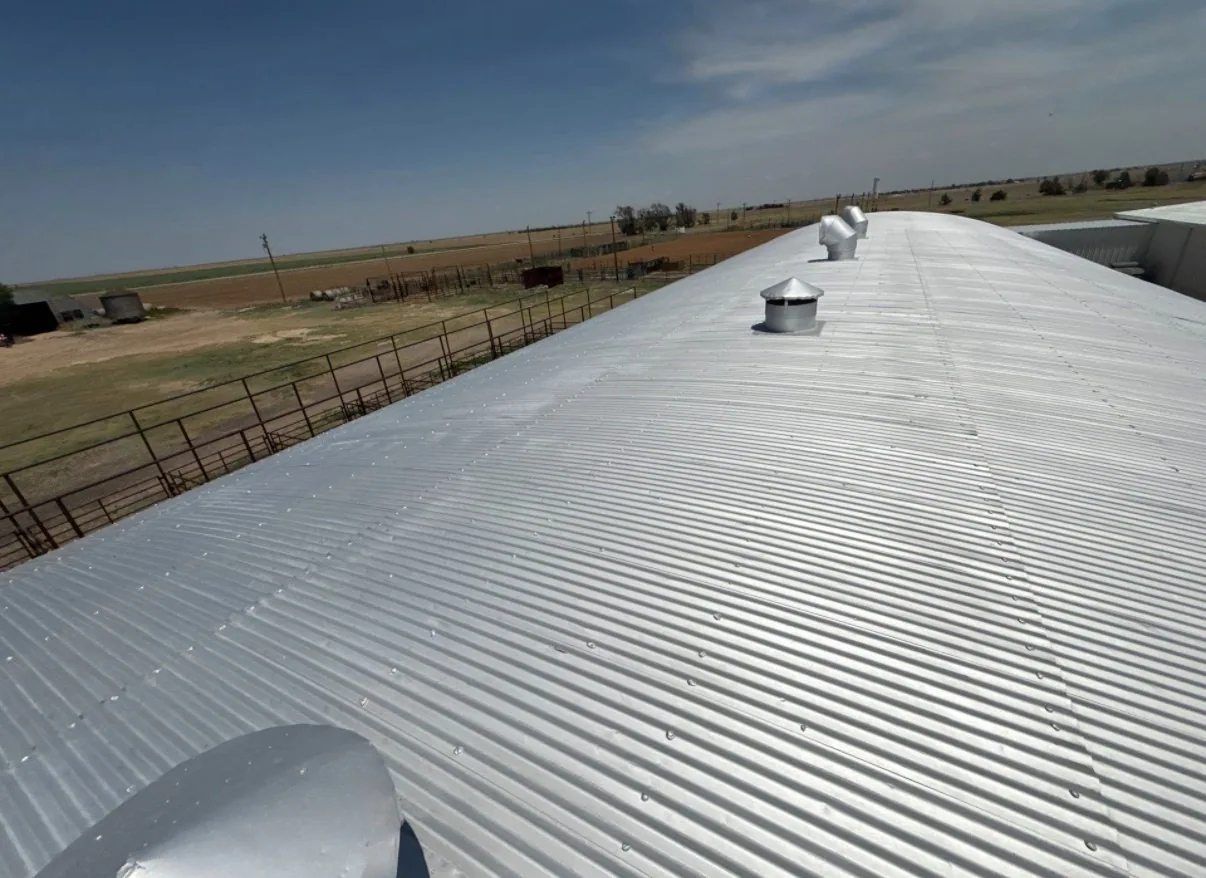
Many storage roofs are exposed-fastener metal. Each panel is held by screws with rubber washers, and the washers dry out. Davenport records have run from 111 F down to -29 F, and a metal panel grows and shrinks across that whole range. Over a few winters the screws work loose, the washers split, and each screw head becomes a small leak.
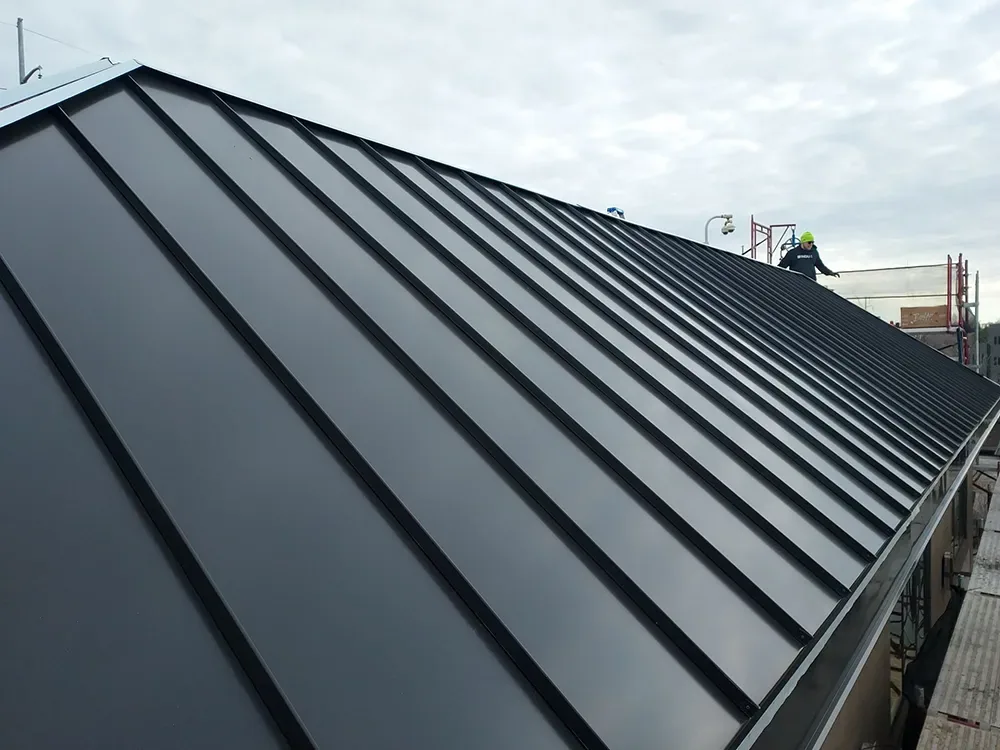
We check the screw rows, the panel laps, the ridge and eave closures and any sealant that has shrunk. Where screws have backed out, larger fasteners and new washers often fix the line. Where panels are sound but the system is tired, a coating restoration can seal the surface. Where panels are rusted through, the choice is a metal roof retrofit over the old deck or a full standing seam replacement.
Hail on Thin Panels
The city center has 133 hail reports inside a 10 mile radius since 2004, among them 2 inch stones on April 7, 2020 and 2.5 inch stones on April 4, 2023. Thin metal shows hail more plainly than most roofing materials.
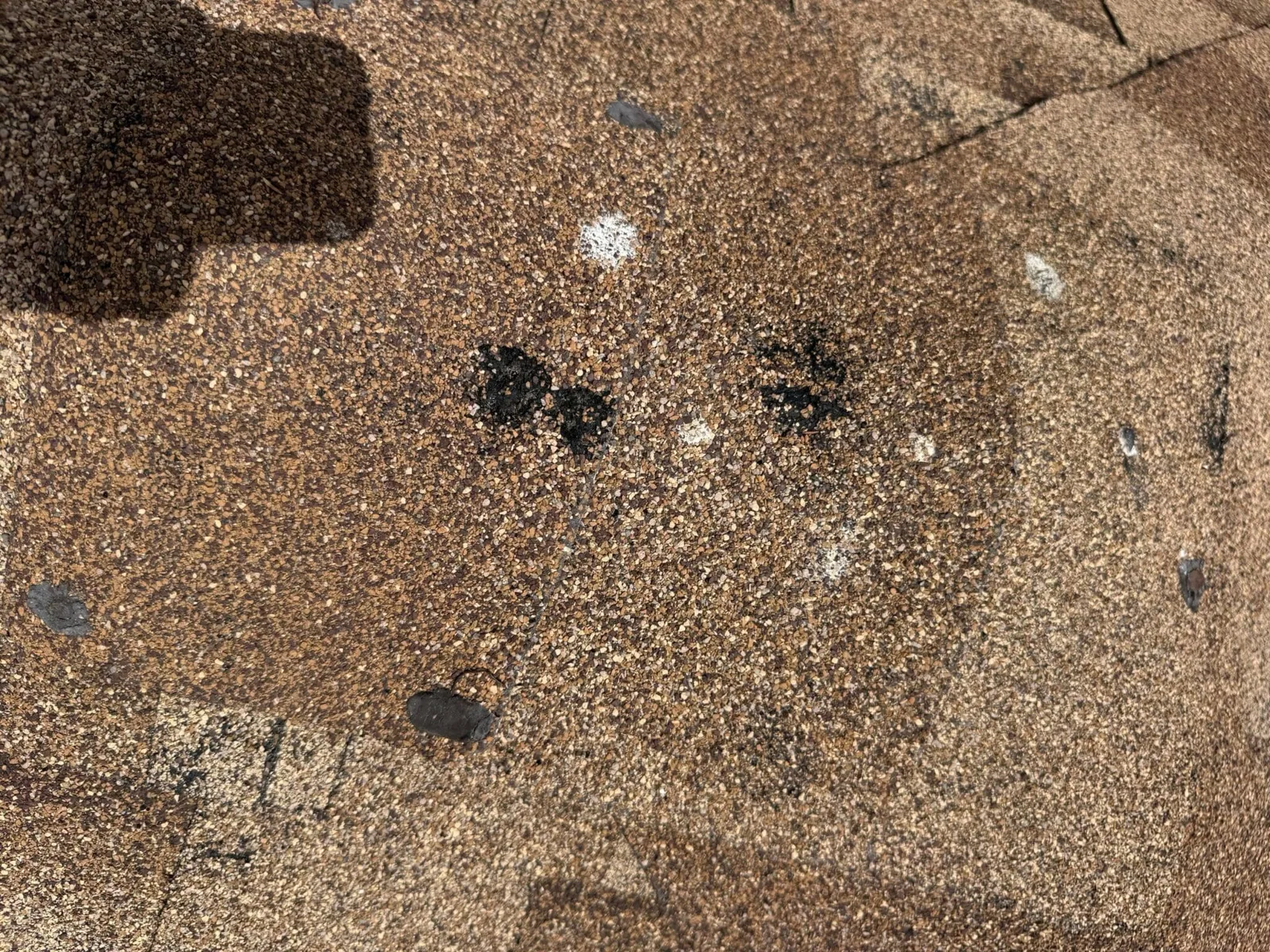
Dents alone are often cosmetic. What matters is whether a stone cracked a seam, split a sealant line, popped a fastener or punched through. We walk the panels, mark every hit on a roof plan and photograph the lot in the same light. Some policies treat cosmetic dents differently from functional damage, so the report separates the two. If the answer is real damage, our hail damage repair follows the plan and the adjuster sees the same record we do.
Eaves and Ridges in the Derecho
In the August 2020 derecho, Davenport Municipal Airport recorded 86 mph, and damaging winds sat over the area for 30 to 60 minutes. On July 15, 2024 a second derecho reached 100 mph in places across the region. Long, low buildings catch that wind along the eaves and the ridge, where trim is the thin part of the system.
Once the wind has passed we check the ridge cap, the eave trim, the gable flashing and the end panels, because a bent trim piece lets wind under the metal next to it. A loosened corner is a small repair today and a peeled panel next season. Debris from the row next door is the other thing to check: one flying panel can dent or puncture the roof beside it.
Getting Into the Units
Most of the evidence is inside the building. To trace a leak we need to see the underside of the roof, which means opening a unit.
We work it out with the manager:
- The office opens vacant units for us, and we ask tenants for a short window to look at an occupied one.
- A tenant notice goes on the door before we arrive, so nobody finds a stranger with a flashlight.
- Ladders and lifts stay out of fire lanes, and a drive aisle is never closed at both ends at once.
- We finish one building at a time, so move-ins and move-outs have somewhere to go.
The gate code, the office hours and the days with heavy truck traffic all go into the schedule.
Kimberly Road and Brady Street Owners
Storage demand follows people. Kimberly Road is a 6.1 mile commercial arterial of retail, apartments and offices running from I-74 to I-280, and Brady Street is a major arterial that runs north to I-80 past retail and industrial parks. A facility serving either one competes on condition: a dry unit is a rented unit, and a stained ceiling shows up in an online review fast.
The decision on each building is repair, coat, retrofit or replace. Cost follows the panel type, the number of buildings, the roof pitch, the trim length and how much the schedule has to bend around tenants. An owner who also holds a warehouse or a flex building can run one plan across the properties. Work along the Kimberly Road corridor and on Brady Street starts with the same walk.
Send the Unit Number or Set a Walkthrough
Send us the unit number, a photo of the stain or the address of the facility. We will set a walkthrough around your office hours and tenant traffic, and come back with a plain recommendation.
Questions About Self-Storage Roofing
A tenant says boxes got wet in unit 118. How do we find the opening from inside the building?
Look up at the underside of the panels with a bright light. Daylight at a lap, a rust streak running down from a screw and a line of stain on the purlin all point to the entry. The opening is usually higher and farther toward the ridge than the wet spot. Take photos and send them with the unit number, and we trace the line on the roof.
Do hail dents on the panels need to be fixed?
Not by themselves. A dent that leaves the coating and the seams intact is cosmetic, and the roof still sheds water. What needs attention is cracked sealant, a split seam, a popped screw or a puncture. We mark each one on the plan and tell you which items affect performance, so the repair covers function and the claim covers what the policy allows.
We own several buildings and cannot do them all this year. Where do we start?
Start with the building that leaks into rented units, then the one nearest the end of its panel life. We rate each roof as repair, watch or replace, and put costs beside the ratings. That lets you spread the work across budgets, and the buildings you wait on get a spring and fall check so a small leak does not turn into a damaged unit.
Can a coating stop screw leaks on an older metal roof?
It can, when the panels are sound. We reseat or replace loose screws, treat the rust, seal the laps and then apply the coating over the whole surface. If the panels are thin from corrosion, a coating just hides a failing roof, and a retrofit or replacement is the right answer. A moisture check under the panels settles which one applies.
Do tenants have to empty their units while the roof is replaced?
Usually not. Tear-off on a metal row can be sequenced so the old panels come off and the new ones go on within the same day, with the weather watched closely. Climate-sensitive or high-value contents deserve a cover or a short move to a vacant unit, and we tell the office which buildings to warn before each phase starts.
Talk to a Davenport Commercial Roofer
Send the work order, the building address or a few photos of what you are seeing. We will set a walkthrough, go up with whoever has the hatch key, and tell you plainly what the roof needs.