
Roofing for Hotel Owners and Hospitality Groups in Davenport, IA
Roofing for hotel owners and hospitality groups in Davenport, IA: leak tracing over guest rooms, work planned around check-in, and storm response.
The call comes through the front desk at two in the morning. A stain is spreading on a ceiling tile in a fourth-floor corridor, a bucket is already down, and the night manager cannot reach the owner. A hotel roof problem rarely stays a roof problem. It becomes a room out of inventory, a refund conversation and a review somebody writes before breakfast.
That is the starting point for hotel roofing in Davenport, IA. The work has to be quick, quiet and planned around check-in. We walk the roof with your chief engineer, find where the water really enters, and give you a plain recommendation: patch it, watch it, or schedule the bigger job into a slow week.
Rooms Out of Service
Water travels. A stain in room 412 may begin at a drain forty feet away, run along the deck, and finally drip where a light fixture opens a path. Housekeeping blocks the room and the problem gets a line in the maintenance log. Then it rains again.
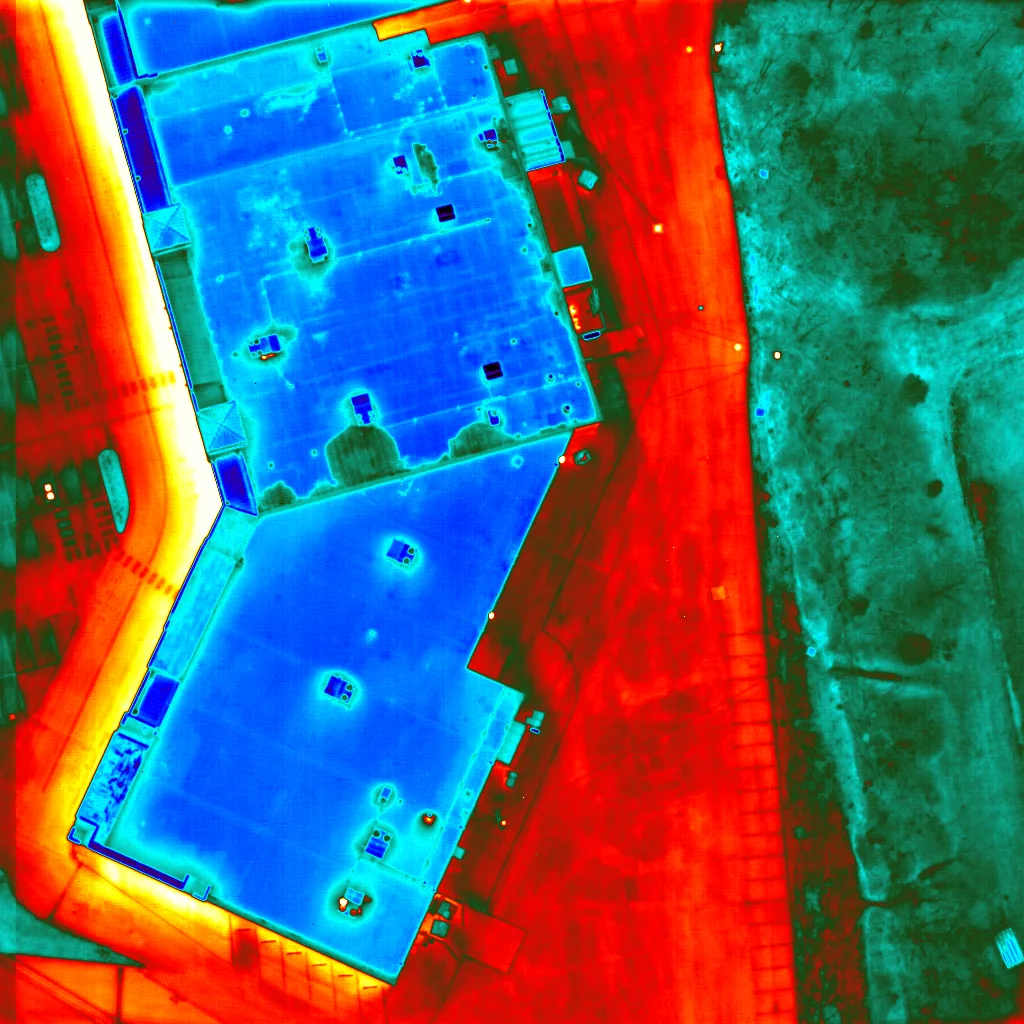
We trace leaks the way a facilities crew would want. Drains first, then flashings, then seams and penetrations. If the insulation under the membrane is saturated, a patch only moves the problem down the hall, so an infrared moisture survey maps the wet areas before anyone writes a scope.
You get a marked-up roof plan that ties each wet zone to the rooms underneath, so the front desk knows which rooms to hold back tonight.
Downtown Hotels and Older Masonry
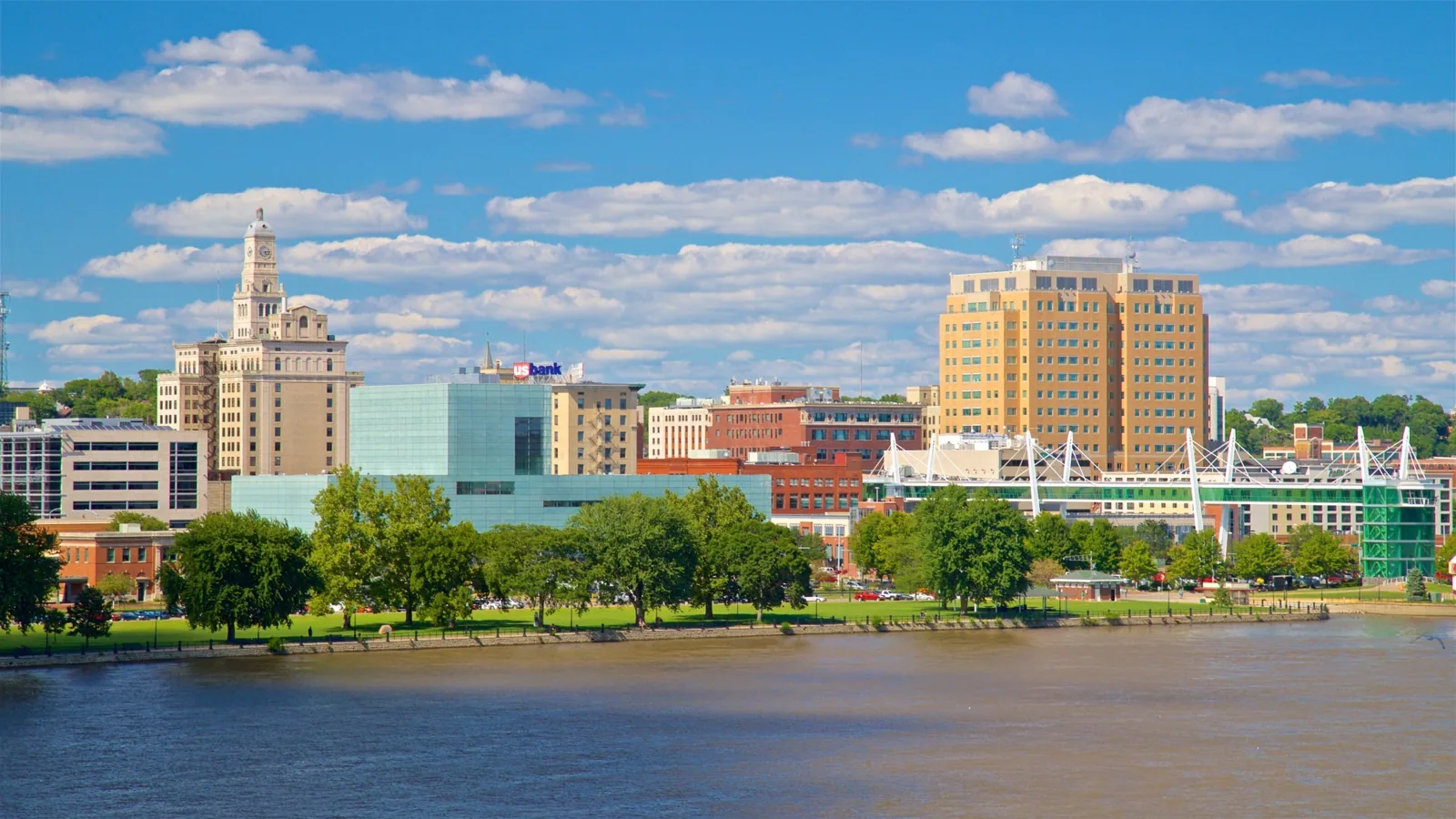
Downtown Davenport's landmarks include the 1907 Davenport Hotel and the 1914 Hotel Blackhawk, in a district where historic masonry and low-slope roofs dominate. A roof like that behaves differently from one on a roadside property. On masonry of that age, counterflashing sits in old mortar joints, and those joints loosen over winters that swing between record readings of 111 F and -29 F.
Before pricing a membrane, we look at the joint where the roof meets the wall. A reglet caulked three times tells us earlier repairs chased the symptom. New mortar and counterflashing can cost far less than a tear-off and fix the actual entry point.
Riverfront owners carry another worry. In April 2019 a temporary barrier failed at River Drive and Pershing Avenue, and water stood about six feet deep across roughly 15 square blocks. A flood never reaches the roof, but recovery that moves equipment up there can add new curbs, and every curb is a new set of seams. We walk downtown Davenport roofs with that in mind.
Kitchens, Laundries and Pool Air
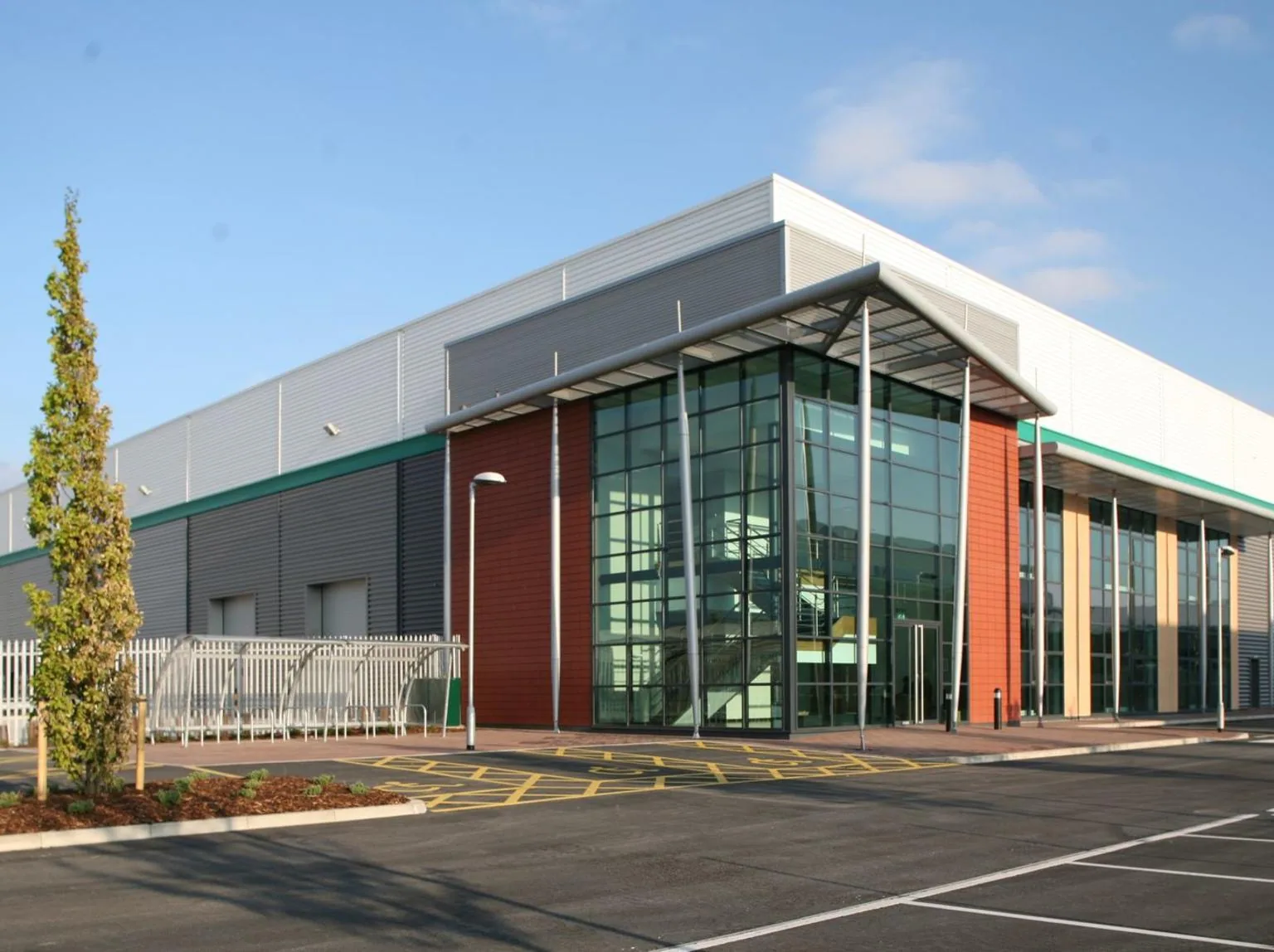
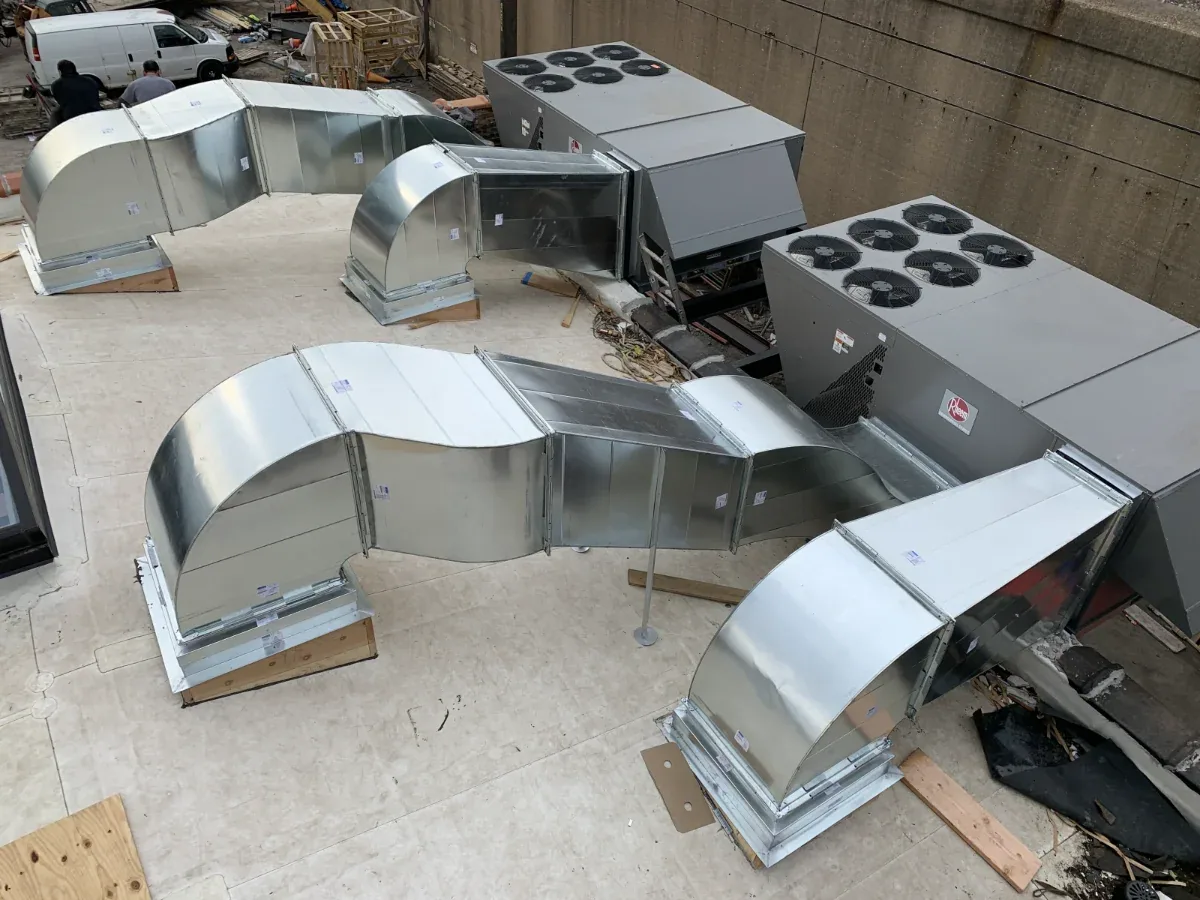
A hotel roof collects exhaust in a way a warehouse roof does not. Kitchen hoods push grease vapor onto the membrane around each fan. Laundry vents blow hot, damp air. A pool or spa needs dehumidification running all day.
Grease is the quiet problem. It softens some membranes and leaves a slick path where engineers walk to reach the fans. PVC and KEE sheets are formulated to resist it, while other materials swell near a hood, so the membrane choice at those spots is a real decision. We check the fan bases for a grease containment pan and press the membrane for soft areas.
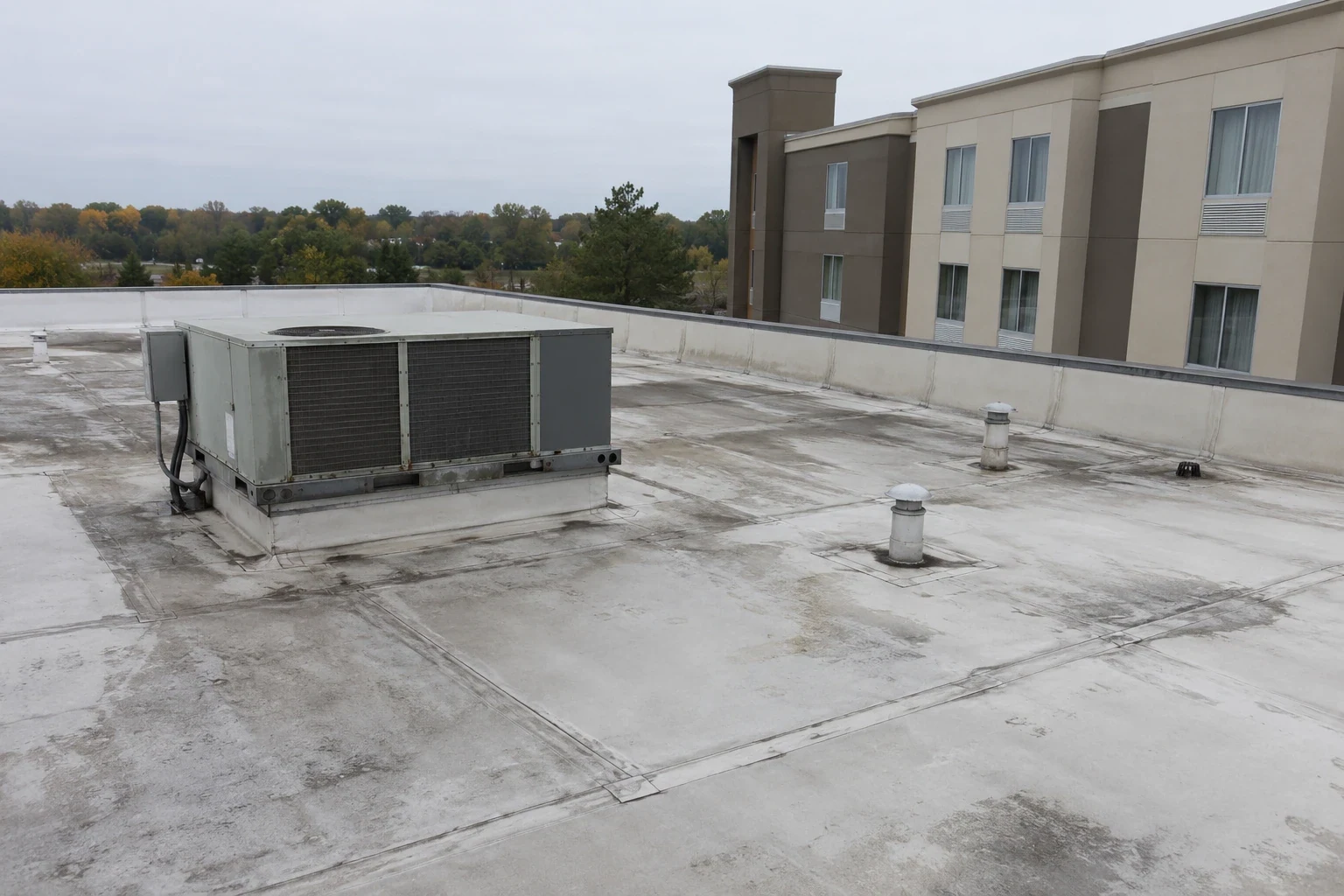
Each unit sits on a curb, and each curb has corners and flashing that move with the heat. We inspect the curbs and supports for cracked sealant, loose counterflashing and standing water at the base.
Work Around Check-In
A guest does not care that the hoist is booked for Tuesday. A guest notices noise at 7 a.m., a smell in the stairwell and a crew working beside the entrance. We plan around those first.
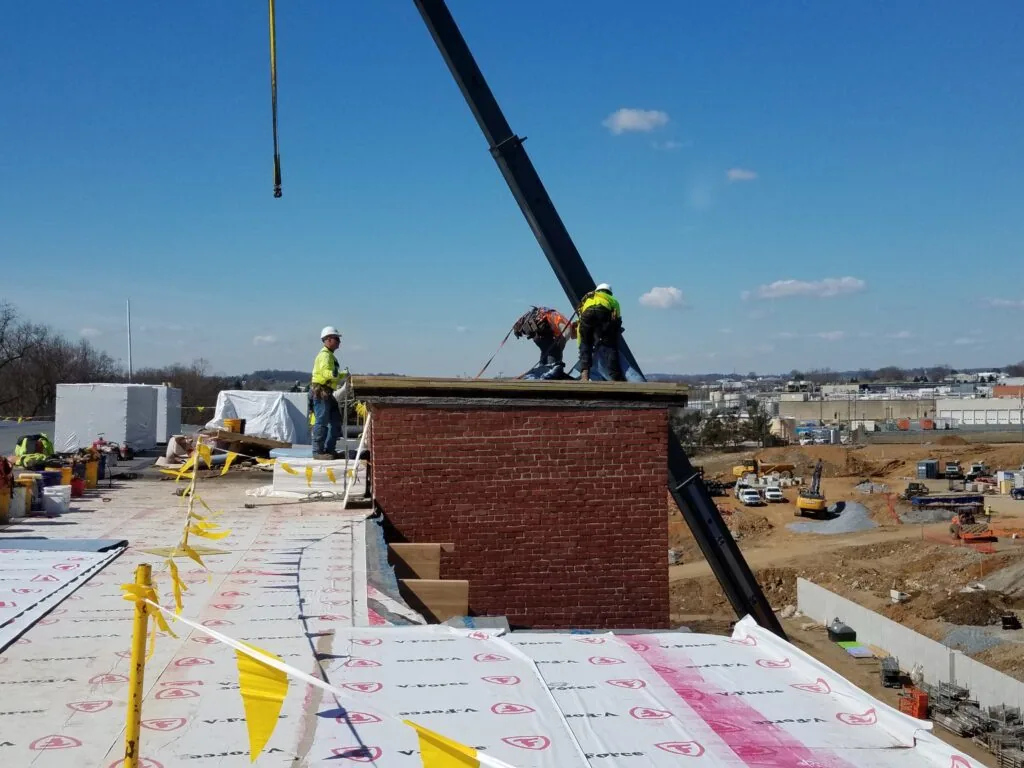
Reroofing an occupied building starts with a map of the wings and their occupancy. We roof the quiet wing first, keep tear-off and loud equipment out of the morning hours, and set up hoisting, material staging and walkways away from the main entrance and the porte cochere. The front desk gets a one-page notice so every shift gives guests the same answer.
Ask your sales team for the event calendar before we set a start date. A show at the RiverCenter and Adler Theatre downtown, or an event at the Quad Cities Waterfront Convention Center on Bettendorf's riverfront, can fill rooms weeks ahead.
Derecho, Tornado and Ice Weather
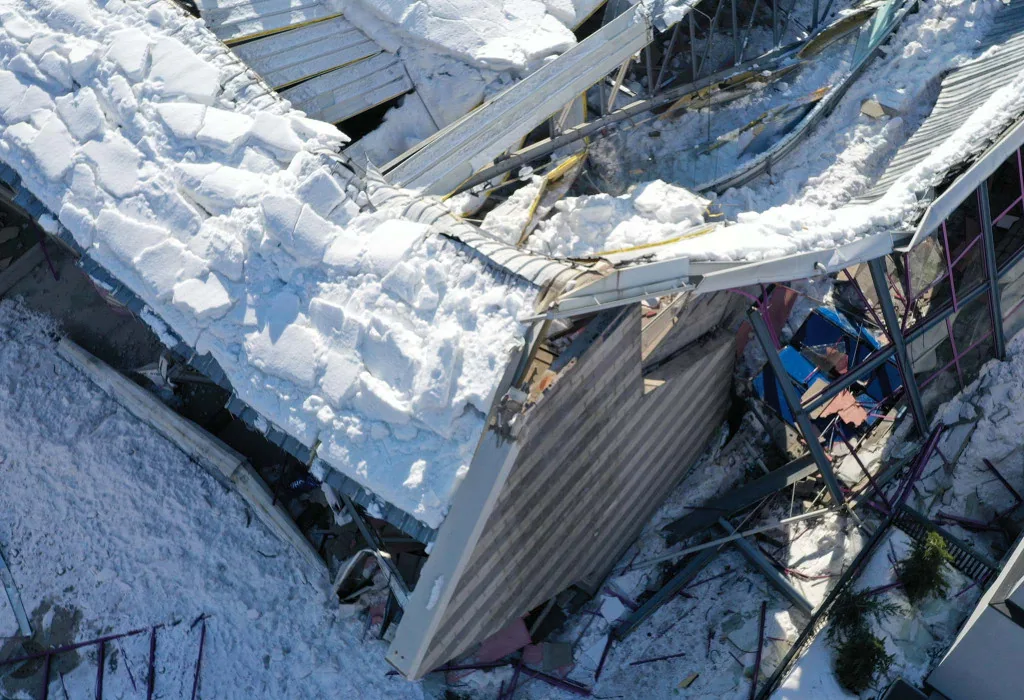
The July 15, 2024 derecho carried winds up to 100 mph across the region, and the EF-2 tornado of July 11, 2025 cut a seven-mile line through Davenport, ending near Kimberly Road and Fairmount Street. On a hotel, rooftop screens, mechanical enclosures and sign mounts catch that wind before the membrane does. When one tears loose, it takes flashing with it.
After a storm, send photos from the guest-room side as well as the roof: ceiling stains, a wet carpet edge, a dripping vent. We use them to decide where to go first, then run a storm damage assessment and set a temporary dry-in so rooms can reopen while the permanent scope is written.
Snow in the Quad Cities averages better than three feet a year, and snow that melts on a warm section refreezes at the drain and backs water under the flashing. Clear drains before December.
Several Properties, One Schedule
A hospitality group rarely owns one roof. A group with a limited-service motel at the I-80 interchange in Walcott, riverfront rooms in Bettendorf and a downtown Davenport property has three different ages, three exposures and three slow seasons. The Walcott interchange holds a large complex of restaurants, motels and truck facilities, including the Iowa 80 Truck Stop.
We rate each roof from photos, core samples and moisture readings, then sort the list into repair, restore and replace. You receive one ranked list based on leak risk instead of property name. That list slots into your roof capital planning and your brand inspection cycle, so a replacement lands in the budget year it belongs to.
Owners who hire property management companies, or answer to real estate investors and REITs, can hand the list straight over.
Send the Roof Plan and the Booking Calendar
Email the room numbers that leak, the roof plan if you have one, and the weeks your property runs slowest. We will set a walkthrough with your general manager and chief engineer, go up with the roof hatch key, and come back with a plain recommendation for each roof.
Questions About Hotel Owners and Hospitality Groups
We have a leak over occupied rooms and a full house this weekend. What do you do first?
Give us the room numbers and the time you first saw the stain. We go up the same day, look at the drains and the nearest penetration, and set a temporary dry-in over the active leak. Then we mark the wet zone so housekeeping can hold only the rooms underneath. The permanent repair waits for a dry stretch and a quieter weekend.
Our brand inspector flagged the roof. Should we replace it or restore it?
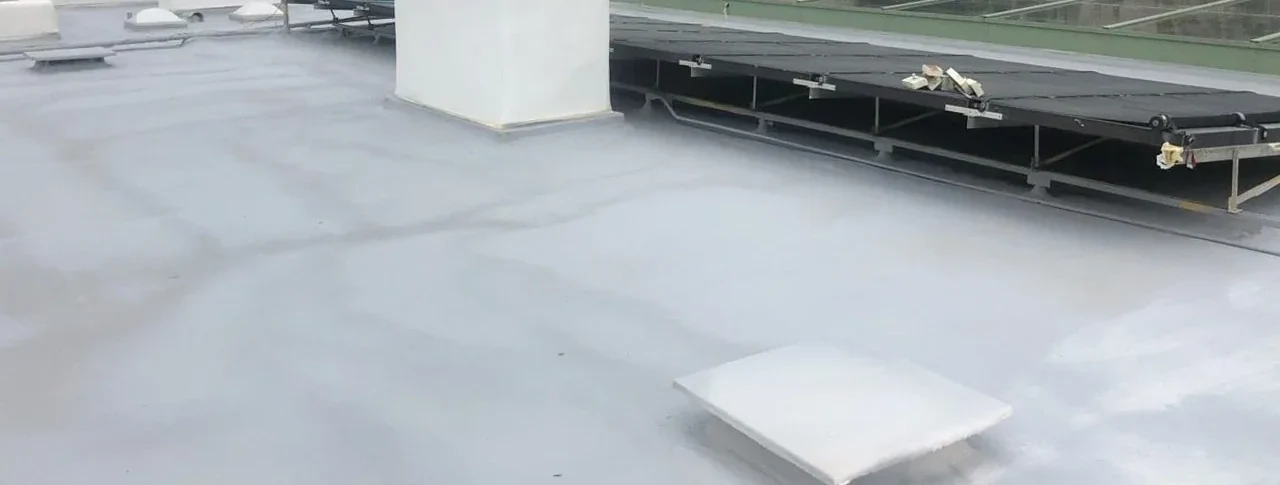
A moisture survey decides it, because dry insulation under an aging membrane can often take a restoration coating, while saturated insulation cannot. We send the survey map and a short written recommendation you can forward to the franchisor. If most of the roof is wet, we say so and price a replacement, because coating over water only buys a bad winter.
How do we keep noise and smell away from guests during a replacement?
Split the roof into zones and work them in order of occupancy. Loud tear-off runs after late checkout and before afternoon arrivals, adhesive work stays downwind of air intakes, and we ask your engineer to shut or filter the nearest outside-air dampers during application.
Does a kitchen or pool below change what goes on the roof?
Both do. A kitchen means grease-resistant membrane and fan-base containment at the hoods. A pool means constant moisture drive from below, so the insulation and vapor retarder choices matter far more than they do over a lobby. Tell us what sits under each section and we will specify to it.
A downtown masonry hotel leaks after every thaw. Where do you look?
Look at the coping joints and counterflashing before the membrane. Freeze and thaw opens mortar at the parapet cap, and water runs behind the flashing and shows up as a ceiling stain several feet from the real opening. We probe the joints, check the drain bowls, and repair the wall detail first, then judge what is left of the field membrane.
Talk to a Davenport Commercial Roofer
Send the work order, the building address or a few photos of what you are seeing. We will set a walkthrough, go up with whoever has the hatch key, and tell you plainly what the roof needs.