
Solar-Ready Roofing in Davenport, IA
Prepare a Davenport, IA commercial roof for solar arrays, or repair a roof under one, with attachment details, drainage and warranty records in order.
A solar developer sends the facilities manager a short email. Roof age? Membrane type? Warranty status? The manager forwards it to three people and nobody has the warranty papers.
A solar project can start just like that, and it is the right moment to call a roofer. An array sits on a commercial roof for a long time. Anything that goes wrong with the membrane underneath it gets harder and more expensive to reach. In Davenport, IA we look at the roof first, then talk about racking, wiring and drains, so the panels do not outlive the roof they sit on.
Roof Age Before Array Age
The first question is simple. Will the roof outlast the array, or will it need replacement partway through? If the answer is replacement, the array has to come off, wait, and go back on. Nobody wants to pay for that twice.
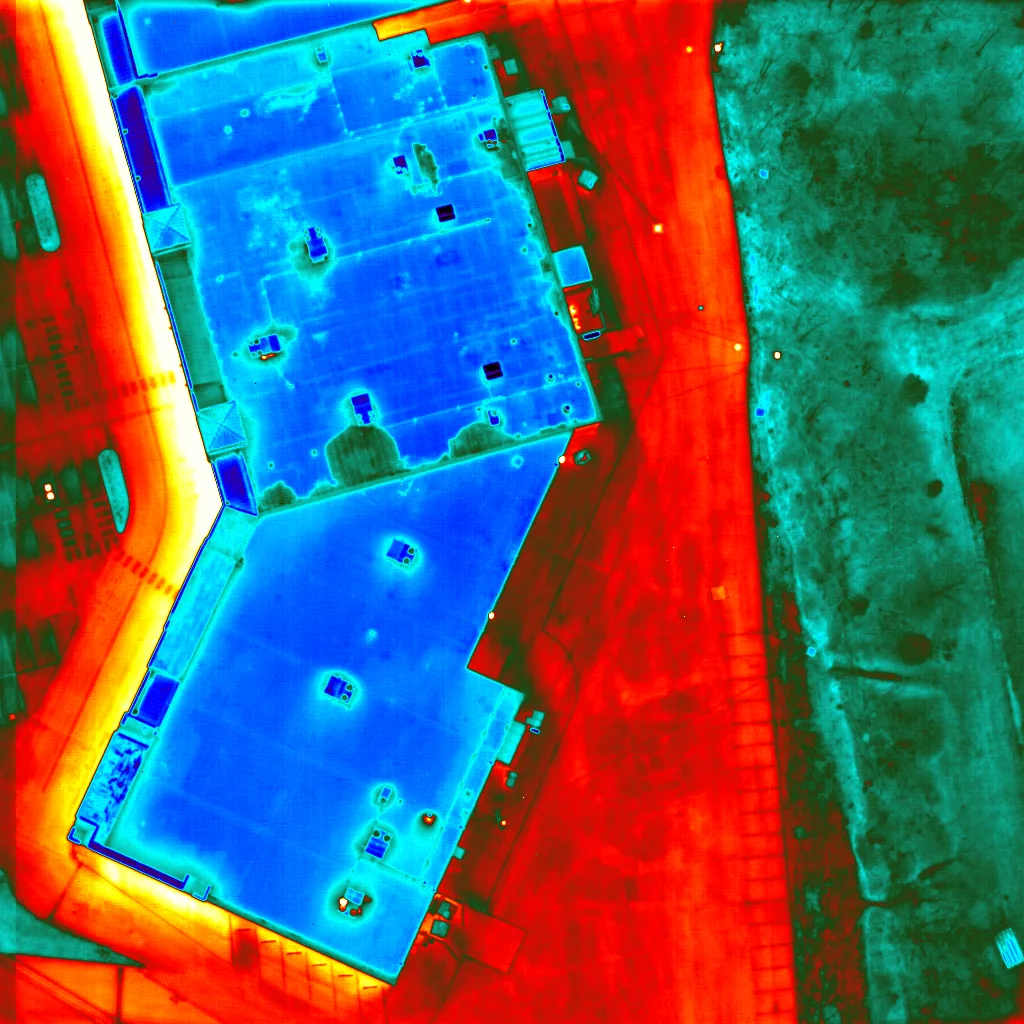
So we start with a condition review. We walk the roof, check seams, flashings, drains and the insulation, and often run an infrared moisture survey to find wet sections before anything is bolted down. A section that is wet today will not dry out under a panel.
Three outcomes are common:
- The roof is sound and has years left. Install the array on it.
- The roof is tired but repairable. Fix the weak sections first, then set the array.
- The roof is near the end. Replace it before the array goes up, with the layout in mind.
When replacement wins, we mark the racking footprint on the plan, so the roof replacement and the array layout agree before either crew mobilizes.
Wind, Snow and the Structure
The structural engineer decides what the roof deck can carry. We supply the roof side of the answer: what is on the deck, how it is attached and where the weak spots are. We do not size racking, and we do not guess at load.
Davenport tests an array in both directions. The July 2024 derecho blew at up to 100 mph in places, and that kind of wind lifts a panel the way it lifts any large flat surface. A normal winter drops more than three feet of snow on the Quad Cities, and a tilted row of panels catches drifts that a bare roof would not. Snow slides off the panel face and piles at the low edge, where it can bury a drain or crush a pipe.
Those two loads decide whether the racking is ballasted, mechanically attached or adhered. Each choice changes what the membrane has to handle.
Racking, Pads and Penetrations
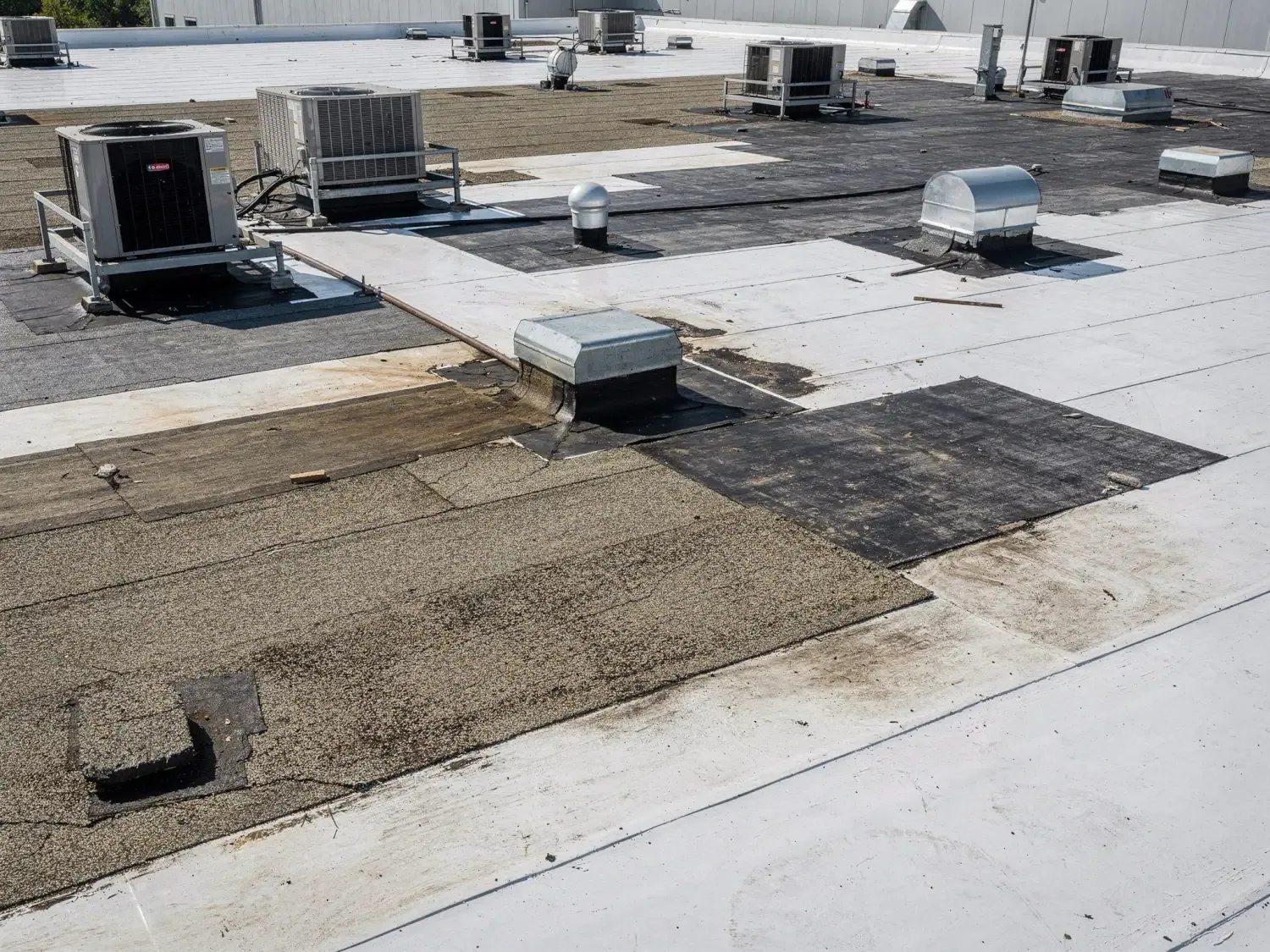
Ballasted racking leans on weight. It needs protection pads under every foot, so the membrane is not ground away by thermal movement. Attached racking goes through the roof, and every attachment is a penetration that needs a proper flashing.
We prefer to see the attachment detail before the install crew arrives. A sealed post on TPO is a different detail than one on a modified bitumen roof, and the wrong sealant lasts a season. Conduit is the other quiet trouble. Wiring crosses the roof to reach the inverter, and the 2023 National Electrical Code, which Davenport lists among its adopted codes, shapes how that conduit is supported. Supports need pads and a walk path, the same as any rooftop equipment. That is why the existing curbs and equipment supports get a look before conduit is routed.
Pathways, Drains and Hail
Davenport also lists the 2021 International Fire Code among its adopted codes. That code addresses pathways and setbacks around rooftop arrays, so the layout gets checked before racking is ordered. Those open lanes also give the roofer room to work.
We keep arrays off drains and scuppers. Water has to leave the roof from somewhere. A panel row that blocks a drain turns a manageable slope into a pond, and a pond turns into a leak.
Hail is the other test. Hail is a regular visitor in this part of Iowa, and the April 4, 2023 storm dropped stones the size of baseballs. A damaged panel is the solar contractor's job. A damaged membrane under the panel is ours, and it is easier to spot when we have mapped the roof before the install.
Working Around an Existing Array
Some roofs already carry panels, and a leak under one is a hard call. The roofer cannot see the membrane, and the solar crew cannot patch it.
The sequence is the same every time. The solar contractor and an electrician isolate and lift the affected rows. We repair or replace the membrane beneath, test it, and hand the area back for the reset. We photograph the roof before and after, so each party knows what condition it left.
On the big low-slope buildings in the Eastern Iowa Industrial Center on I-80, where Amazon's fulfillment center sits on a 158-acre site inside the park and the Sterilite plant stands beside it, a lift-and-reset plan is a scheduling puzzle as much as a roofing one. The plant manager approves the window, and we work inside it.
Warranty Papers and the Handoff
Most roof manufacturers have requirements for work done on top of their membranes. Some want notice, some want a specific walkway system, and some want an inspection afterward. We read the roof warranty documents before the install date so nothing is a surprise. Our warranty management work keeps those records in one place.
When the array is up, we leave you a roof plan that shows the panel footprint, the drains, the conduit paths and the penetration locations. Keep it with the roof file.
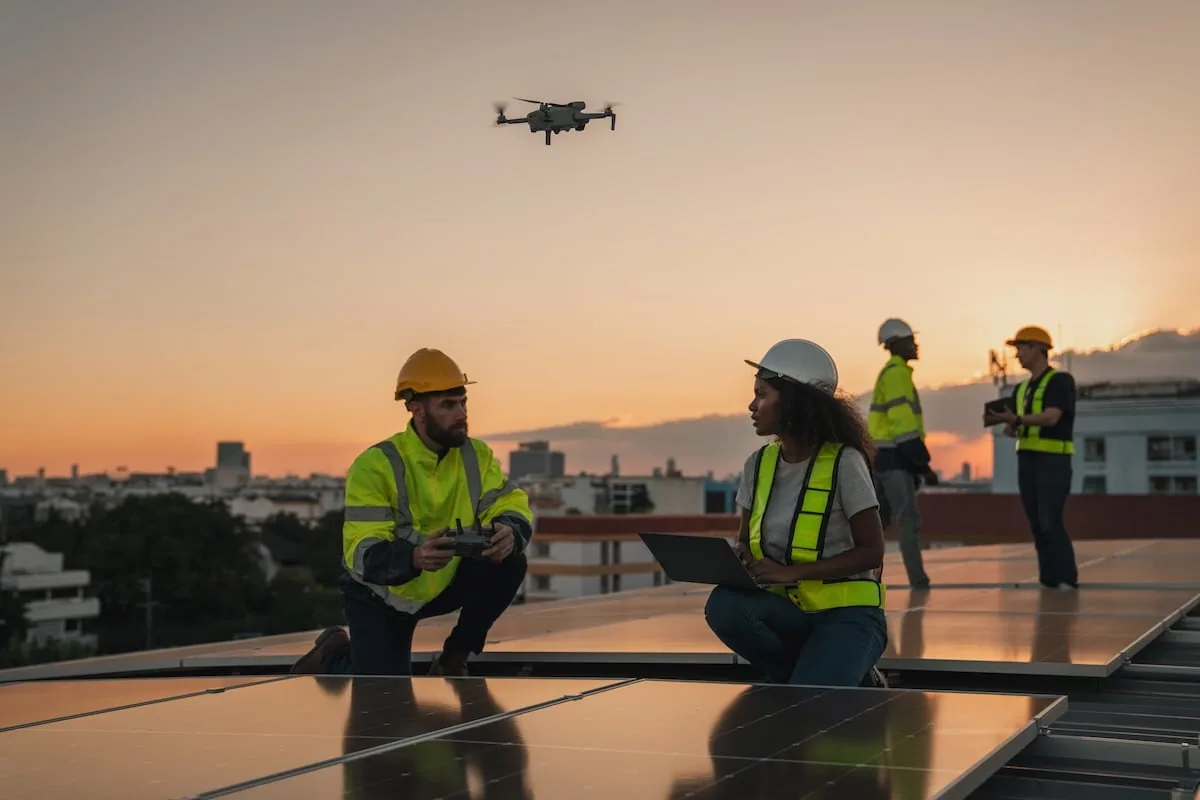
Solar readiness begins with a roof life decision. If the membrane or insulation is near replacement, installing arrays first can force an expensive remove-and-reset later. We review remaining roof condition, drainage, attachment zones and access paths, then coordinate structural and electrical design with the solar team. The roofing scope identifies penetrations, flashing responsibility and the future service route around equipment. A roof plan with those boundaries prevents each trade from assuming the other owns a leak.
Send the Developer's Email
Forward the questions the solar developer sent you, along with any roof records you have. We will set a walkthrough and answer them from the roof.
Questions About Solar-Ready Roofing
How much life should be left in the roof before we put an array on it?
Plan for the roof to outlast the array, or replace it first. A roof with years of life left and dry insulation is a good candidate. One that is already leaking is not. We run the condition review and, where needed, a moisture survey, then give you a written call.
Does installing panels void the roof warranty?
Not by itself, but many warranties set conditions for work on the membrane, such as notice to the manufacturer or an approved walkway. Send us the warranty papers early. We read them against the racking detail and tell you what needs to happen before the first foot is placed.
Who fixes a leak under a panel row?
Both trades are involved. The solar contractor lifts the rows, we repair and test the membrane, and the solar contractor sets the rows back. That sequence has to be scheduled, so call us before the leak grows and the repair area gets bigger.
Can a coated roof carry an array?
A sound coated roof can, if the coating is well bonded and the insulation is dry. Foot pads and attachments need to be compatible with the coating. We check adhesion before recommending a racking type, since a coating that peels under a ballast block will not heal itself.
Do you have to be on site when the panels go in?
For ballasted and attached systems, we want to see the pads and flashings set before the racking goes over them. A short visit at the start and a final walk afterward catches most mistakes. We also photograph the roof so the record shows its condition at handoff.
Talk to a Davenport Commercial Roofer
Send the work order, the building address or a few photos of what you are seeing. We will set a walkthrough, go up with whoever has the hatch key, and tell you plainly what the roof needs.